
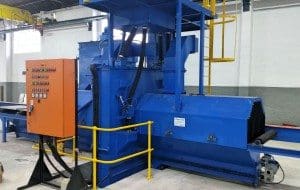
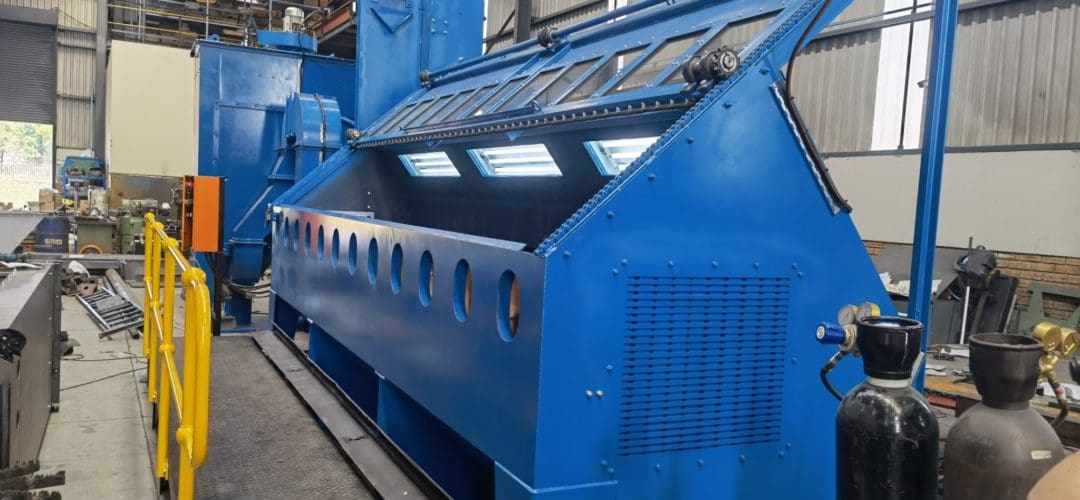
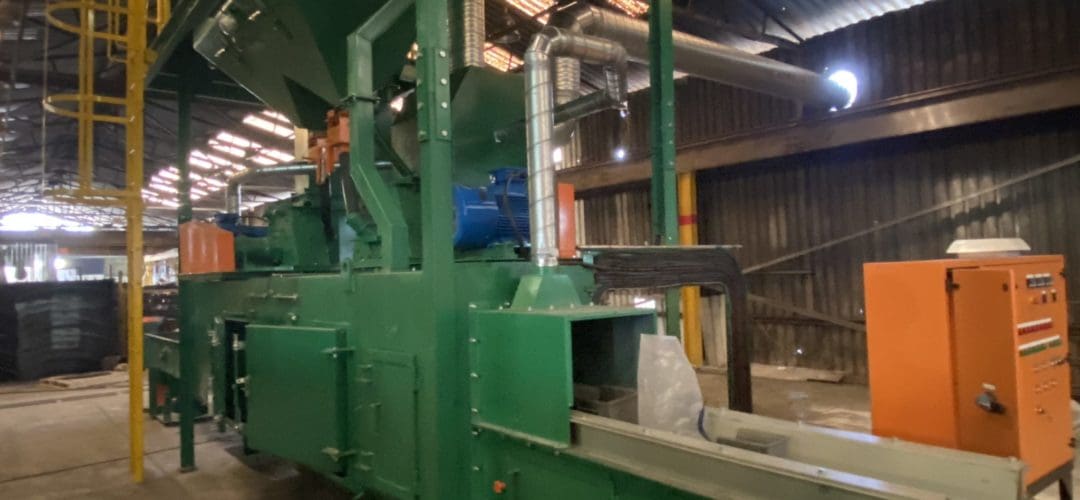
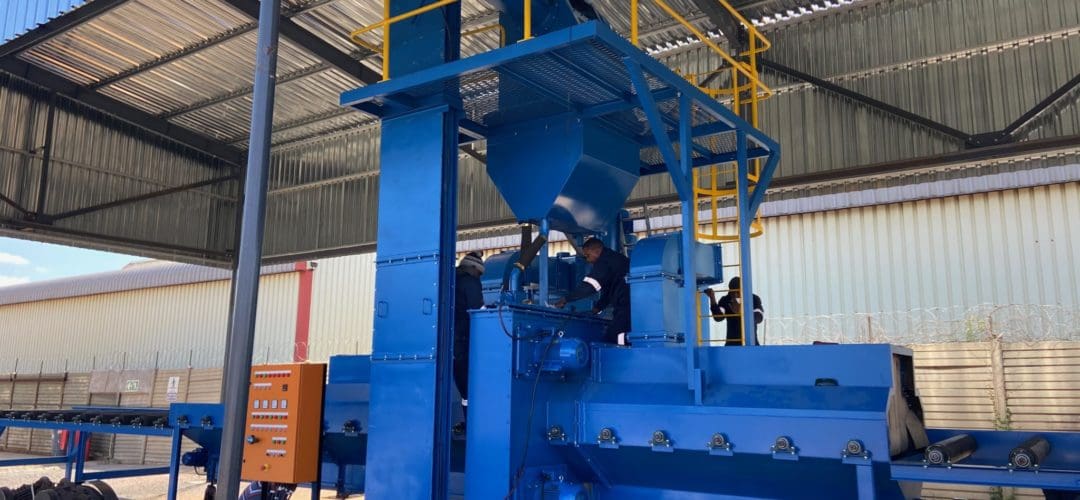
Our wheelabrator shotblasting machines allow large volumes of product or material to be processed quickly and reliably. The machines have a number of driven wheels that focus shot on the workpiece, in addition, some form of automated loading or movement through the machine is usually present. These machines are all designed and built to specific customer requirements. The wear areas of our machines are constructed from high chrome cast wear plates to extend service life.
Wheel blasting — sometimes called airless blasting — uses motor-driven bladed wheels to accelerate steel shot at the workpiece at high velocity. Because no compressed air is involved, wheel machines deliver far higher abrasive throughput per kilowatt than air blasting, making them the standard choice for continuous production cleaning, descaling and surface preparation of castings, forgings, plate and structural steel.
Tilghman Rotoblast designs and manufactures wheelabrator machines in South Africa to each customer’s component envelope and throughput requirement. We also rebuild and retrofit existing wheel blast machines of most makes — replacement blast wheels, high-chrome wear plates and upgraded dust extraction — and supply the blasting media they run on.
The following types of machines are the most common:
Plate and pipe machines
These machines are adapted to a specialised purpose. Different versions of the machine are able to clean a number of regular shaped items including flat plates, round tube or pipe and I-beams. The pipe cleaner type machines are also typically used in the cylinder industry. The machines typically have two to eight blasting wheels focused on the top and bottom of the parts to be cleaned. The machines allow fast production rates and an even finish on parts that cannot be achieved through manual methods.
Tumblast machine
This machine continuously moves the components through a tumbling action of the belt conveyor ensuring that components are continually exposed to the blast stream and completely cleaned. For easy unloading, the belt conveyor is reversed, delivering the components into the loading skip. For small to medium sized and irregular shaped components this results in efficient and consistent treatment of the components surface.
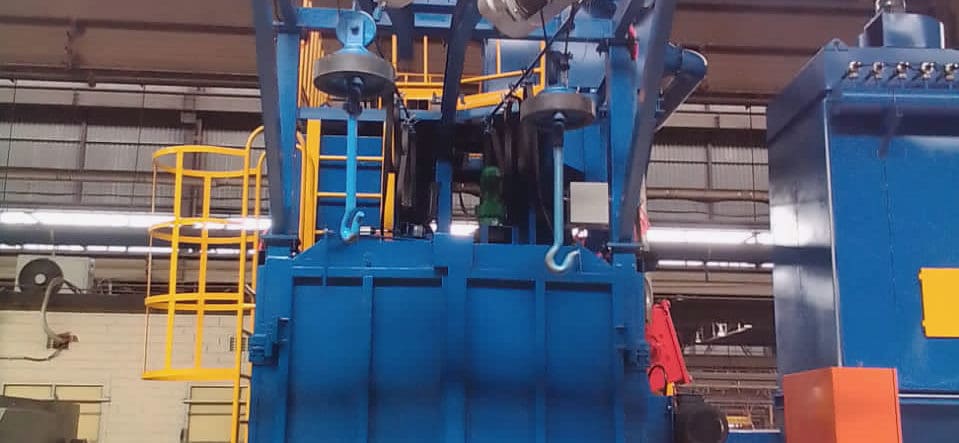
Hanger Type Machine
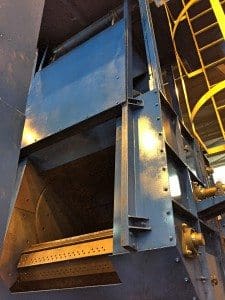
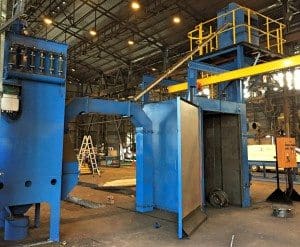
These machines allow larger irregular shaped components to be shotblasted in batches. They can be manually loaded or can use an automated overhead conveyor. The parts typically rotate in the machine whilst being blasted by one to four or more wheels.
Recent Wheelabrator installations
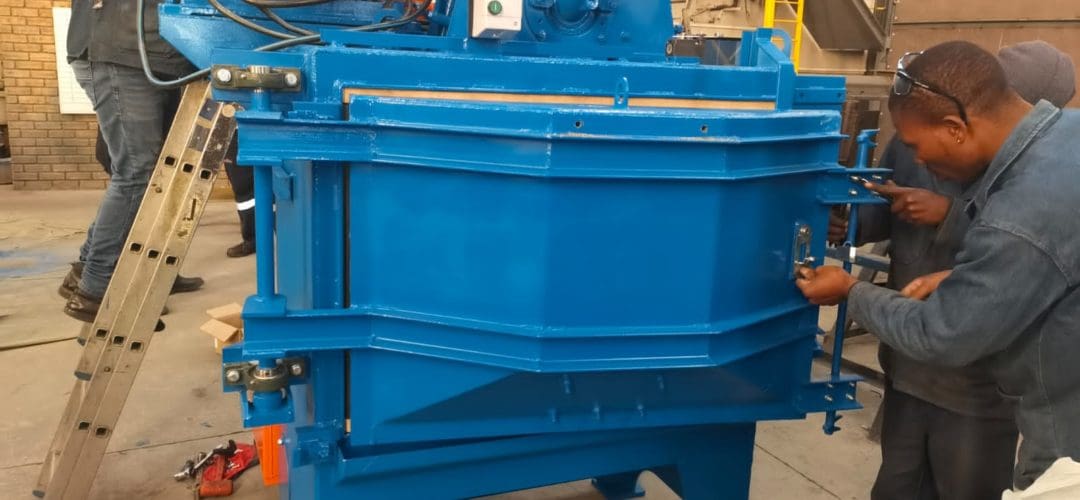
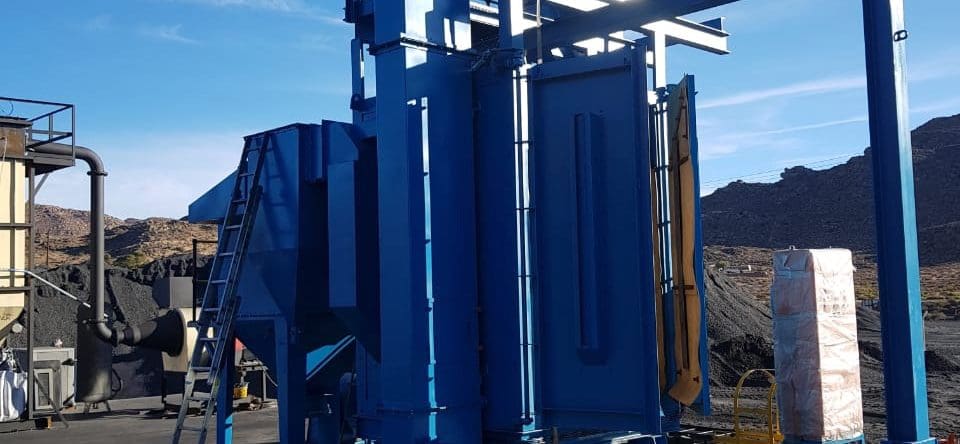
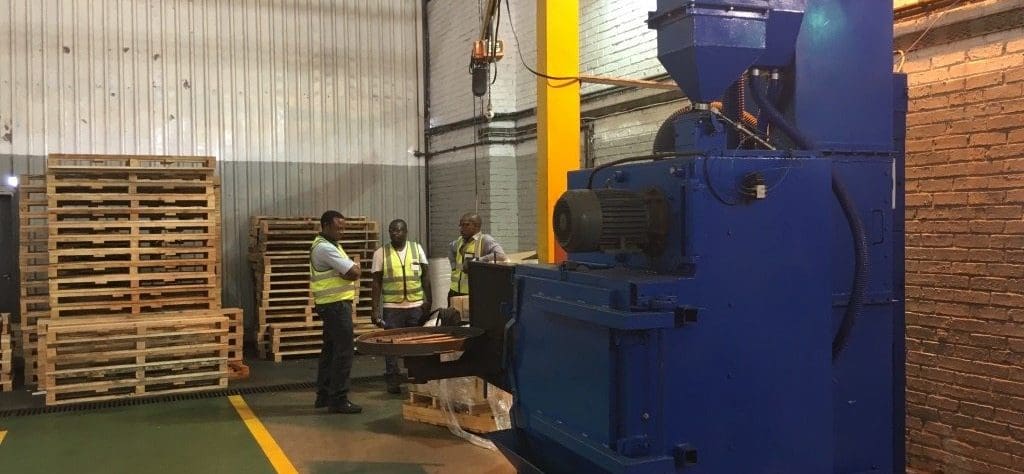
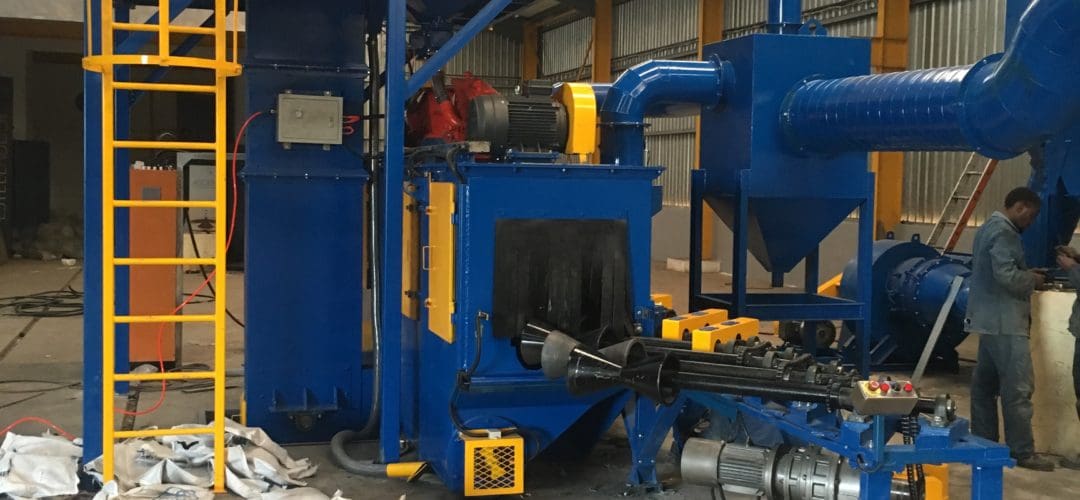
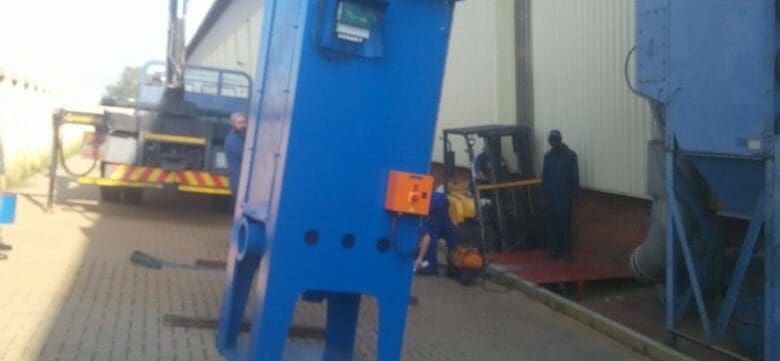
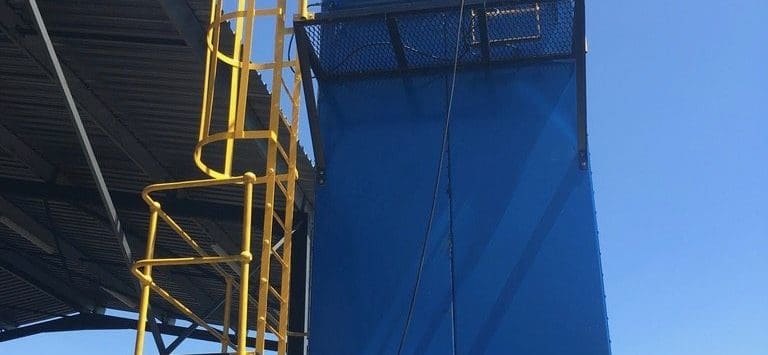 Dust extraction and material transportation for recycling plant
nickeys, February 12, 2017
Read more…
Frequently asked questions
What is a wheelabrator?
“Wheelabrator” began as a trade name and is now used generically for any wheel blast machine: an enclosed machine that uses spinning bladed wheels to throw steel abrasive at components for cleaning, descaling and surface preparation. Tilghman Rotoblast designs and manufactures wheelabrator machines in South Africa.
How does a wheel blast machine work?
Motor-driven wheels accelerate steel shot to roughly 60–80 m/s and direct it in a controlled pattern at the workpiece. Spent abrasive falls into a recovery system where it is cleaned, separated and recirculated to the wheels, while a dust extraction unit removes fines and contaminants.
What is the difference between wheel blasting and air blasting?
Wheel machines deliver large volumes of abrasive continuously and economically, suiting repeatable high-throughput work. Air (nozzle) blasting suits very large one-off structures, selective blasting or delicate work. Many plants run both; Tilghman manufactures wheel machines, blasting booths and blast pots.
What types of wheelabrator machines are available?
Tumblast machines for batches of small components, hanger machines for larger irregular parts, plate and pipe machines for plate, beams and tube, table machines, and continuous roller-conveyor systems. The right configuration follows the component shape and required throughput.
How do I choose the right size of machine?
Sizing is driven by the largest component envelope, the shape and weight of parts, and the required production rate. These determine the number and power of blast wheels, the handling method and the abrasive recovery capacity. Each Tilghman machine is engineered to the duty.
What abrasive do wheelabrator machines use?
Almost always steel shot, selected by size and hardness for the finish required. The abrasive recirculates thousands of times before wearing out, so consumption is low relative to the tonnage processed.
Can an existing wheelabrator be rebuilt or upgraded?
Yes. Tilghman rebuilds and retrofits wheel blast machines of most makes — replacing blast wheels, high-chrome wear plates, elevators and separators, and upgrading dust extraction and controls — typically at far lower cost than machine replacement.
Does a wheel blast machine need dust extraction?
Yes. Effective extraction keeps the abrasive mix clean, maintains blast efficiency and controls dust emissions for safety and compliance. Tilghman machines are supplied with appropriately sized cartridge or baghouse dust collectors.