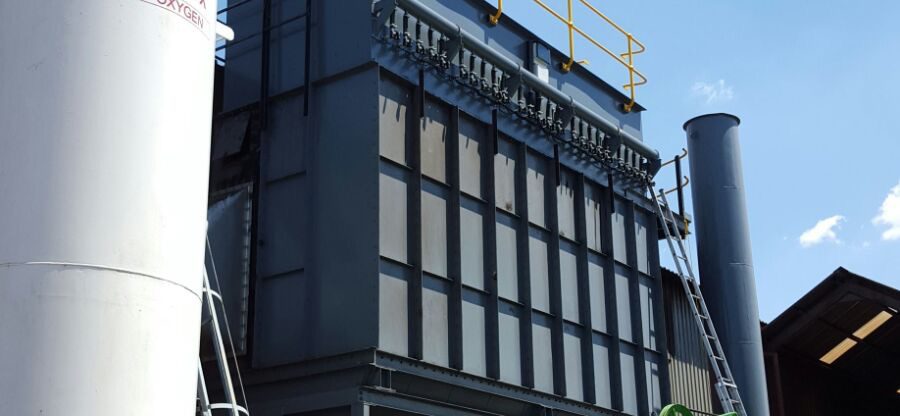
Industrial Dust Collection & Extraction Systems
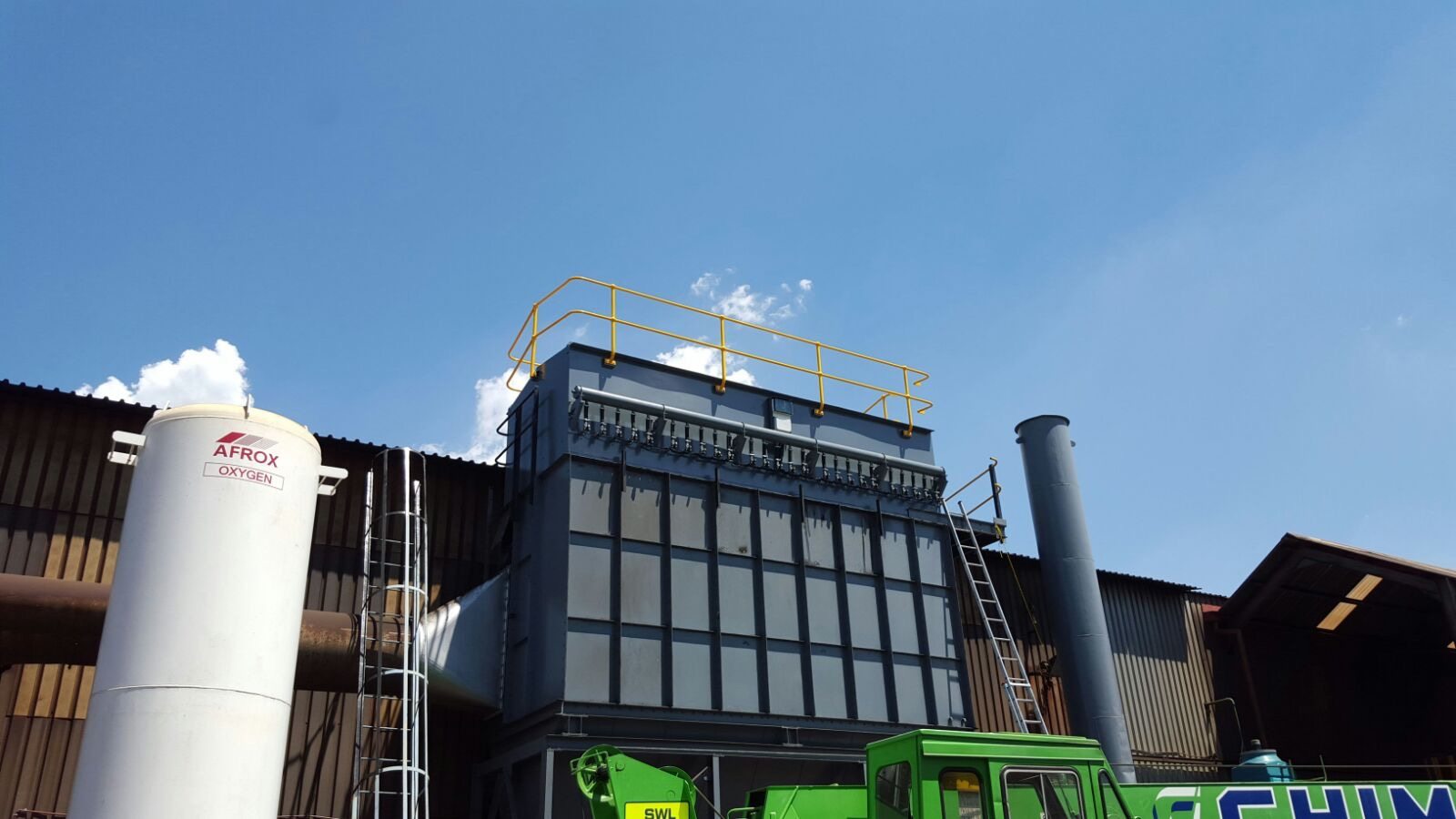
Tilghman Rotoblast designs and manufactures industrial dust collectors and dust extraction systems at our facility in Gauteng, South Africa. With decades of experience in surface preparation and finishing, we provide complete turnkey dust collection solutions — from initial system design through to manufacture, installation and commissioning. Our engineering team can advise on every aspect of your dust extraction system, including dust containment strategy, ducting layout, hood design, and correct sizing and selection of the dust collector unit itself. All our dust collectors deliver air cleanliness of greater than 99%, using high-quality German filtration media that can be engineered for demanding conditions such as high temperatures, elevated moisture levels, or abrasive dust environments. Every unit features microprocessor-controlled self-cleaning pulsating action for consistent, reliable performance. Our standard range covers capacities from 1 m³/s to 36 m³/s, and we regularly design custom systems for larger or specialised applications.Applications & Industries
Our dust extraction systems serve a wide range of industrial applications across South Africa, including:- Shot blasting booths and wheelabrator machines
- Forging and foundry operations
- Powder mixing and handling plants
- Welding and fabrication workshops
- Woodworking and timber processing
- Mining and mineral processing
- Any manufacturing process that generates airborne dust or particulate
Cartridge Type Dust Collectors
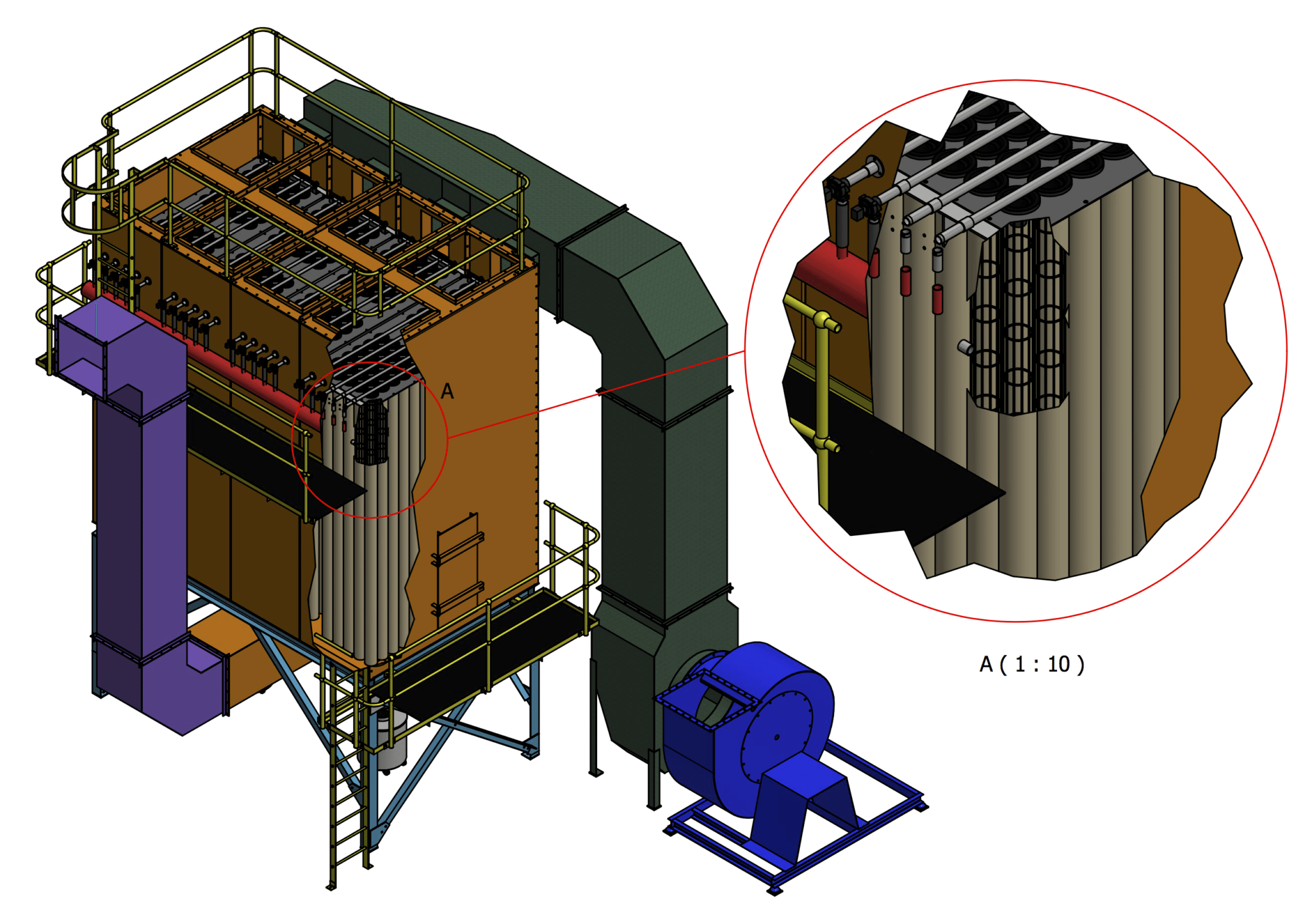
Cartridge type dust collectors operate in a similar manner to bag type dust collectors, but use pleated filter cartridges instead of cylindrical bags. The pleated design means there are numerous cartridges inside the dust collector that provide a significantly larger surface area for filtration within a more compact housing.
Like our bag type units, the filter cartridges are periodically cleaned by fresh air pulses from PLC-controlled pulsating valves. The pulsating air that is released creates a shock pulse on the cartridge which causes the dust to fall off the filter media and into the collection hopper below.
The cartridges typically provide excellent air cleanliness of over 99%, making them suitable for fine dust applications in industries such as welding, laser cutting, plasma cutting, and pharmaceutical manufacturing.
Cartridge type dust collectors are more compact than cylindrical bag-type dust collectors because the pleated cartridges have a greater effective surface area per unit. They can also be designed to be changed from the front of the dust collector instead of the top, reducing ceiling height requirements and simplifying maintenance access. This makes cartridge collectors an excellent choice where floor space or building height is limited.
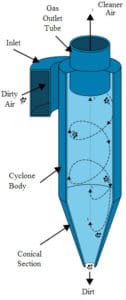
Cyclone Dust Collectors
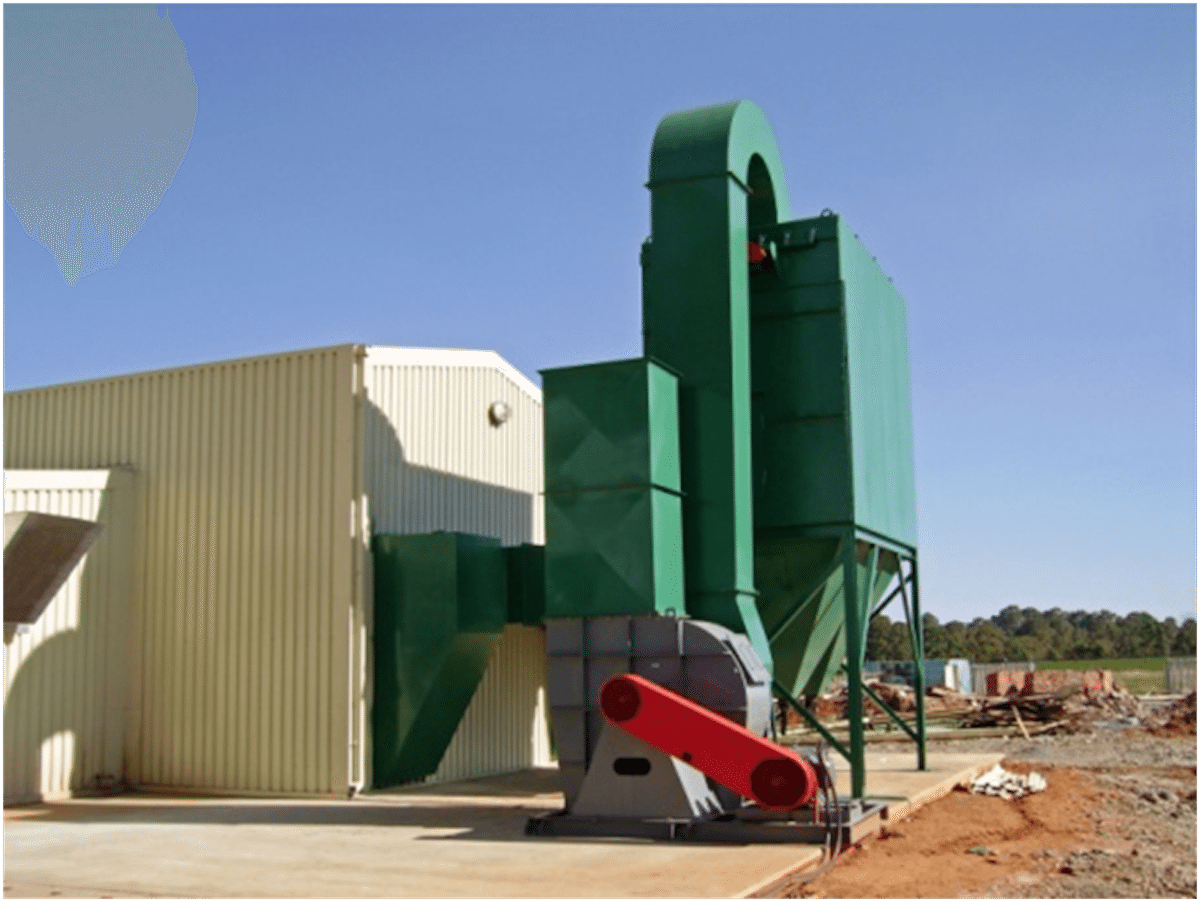
A cyclone dust collector can be used on its own to reduce the amount of dust expelled in a system, or in conjunction with a bag or cartridge type dust collector to act as a pre-separator — collecting larger, heavier particles before they reach the main filter unit. This extends filter life and reduces maintenance costs on the primary dust collector.
In a cyclone, dust-laden air enters at the top and is forced into a circular downward “cyclonic” pattern. The heavy particles drop out of the air stream as their velocity decreases and are collected in a hopper at the base. Cleaner air leaves the cyclone from the top. Because cyclones have no moving parts and no filter media to replace, they are extremely low-maintenance and cost-effective.
Cyclones are used in many industrial applications but are particularly common in the woodworking industry, mining, grain handling, and in industries that generate larger dust particles such as recycling and plastics processing.
Dust extraction systems
A dust extraction system captures dust at the source and carries it to a collector before it spreads through your plant. Every system we build has three parts that are designed together:
- Capture: hoods, booth extraction or machine connections placed where the dust is made
- Ducting and fan: sized so the air speed keeps dust moving without wasting power
- The dust collector: bag, cartridge or cyclone, chosen for your dust type and volume
Getting the airflow right matters more than the collector itself. An undersized fan or badly balanced ducting leaves dust in the air, however good the filters are. We design, build and install the complete dust extraction system, so one team is responsible for how well it works.
Dust collection systems for blasting, foundry and fabrication
As builders of shot blasting machines and blast rooms, we know abrasive and metal dust well. Typical Tilghman dust collection systems serve:
- Blast rooms and wheel blasting machines, where the collector also protects media recovery
- Foundries and forging plants: knockout, fettling and grinding dust
- Welding, laser and plasma cutting: fine fume, usually best handled by cartridge collectors
- Mining, minerals, food and recycling plants, often with a cyclone ahead of the filter
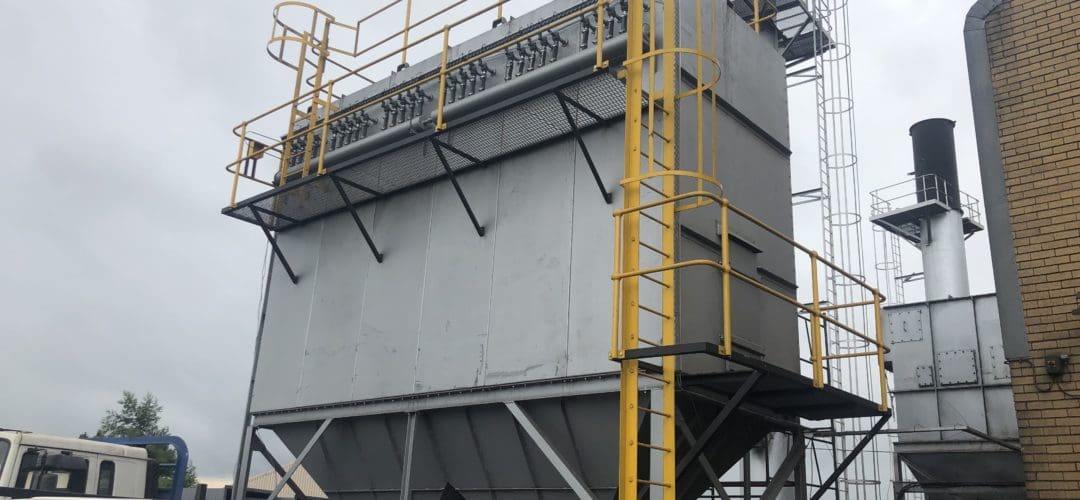
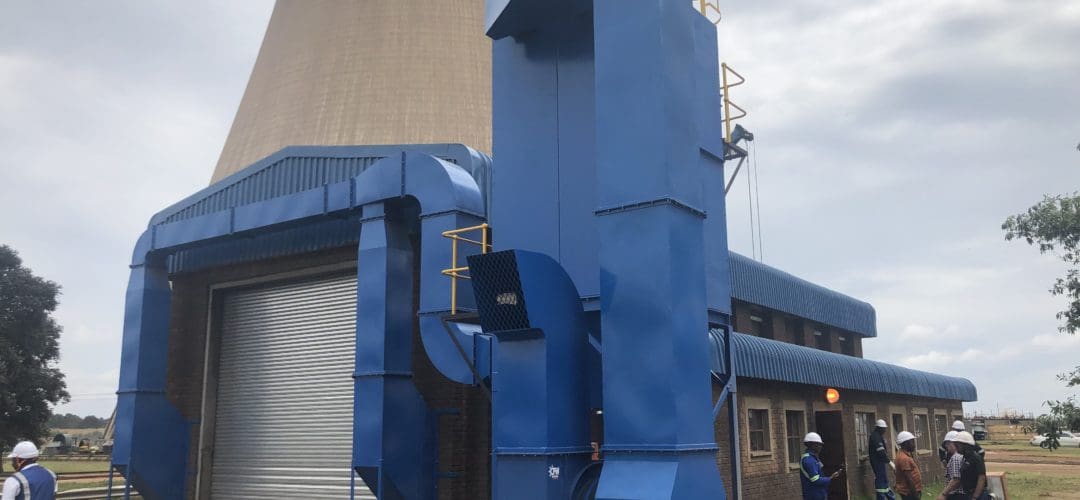
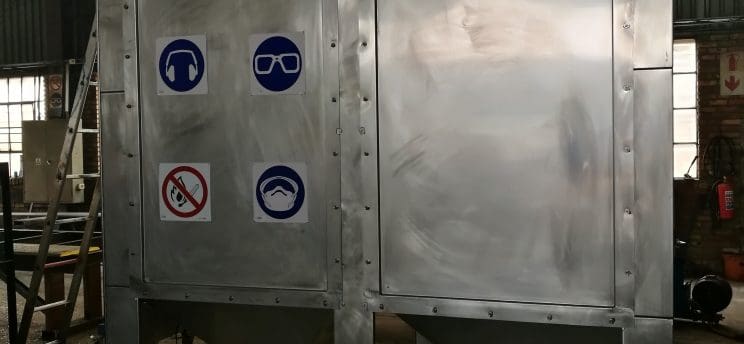
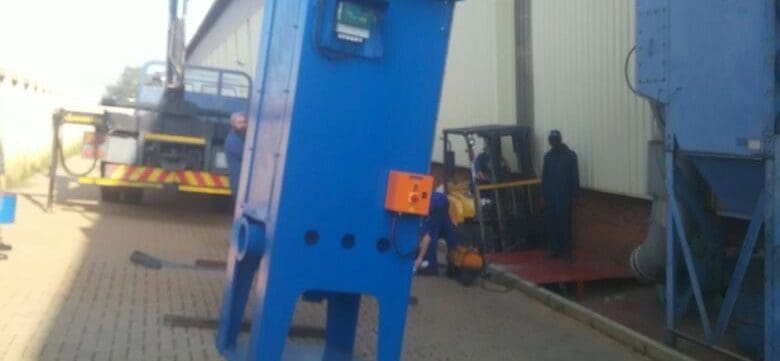
See our recent installations below for examples, including furnace, boiler, grinding-table and food-industry systems.
Dust collector FAQ
What is the difference between dust extraction and dust collection?
Dust extraction is capturing dust at its source and moving it through ducting. Dust collection is separating that dust from the air in a bag, cartridge or cyclone collector. A complete system needs both, and we design them together.
Bag, cartridge or cyclone: which dust collector do I need?
Bag (baghouse) collectors handle large air volumes and heavy dust loads. Cartridge collectors suit fine dust and fume, such as welding and laser cutting, in a compact unit. Cyclones remove coarse particles cheaply and are often used ahead of a filter. The right choice depends on your dust, air volume and site.
How do you size a dust extraction system?
We work from the dust sources: how many, how much air each needs to capture the dust, and the length of the ducting. From that we size the fan and the collector’s filter area. Send us your process details or a layout and we will propose a system.
Do you install and service dust collectors?
Yes. Tilghman designs, manufactures and installs dust collectors from our Benoni works, and we can supply replacement filters and spares.
Can you upgrade an existing dust collector?
Yes. We regularly upgrade underperforming systems, for example with new filters, a larger fan or improved ducting. See our dust collector upgrade project below.
Get a Custom Dust Collection Solution
Every dust extraction requirement is different. Contact our engineering team to discuss your specific application — we can design and manufacture a complete dust collection system tailored to your process, dust type, and site conditions.
Call us on 011 865 5770 or request a quote online. See some of our recent dust collector installations below.
Recent Dust Collector installations
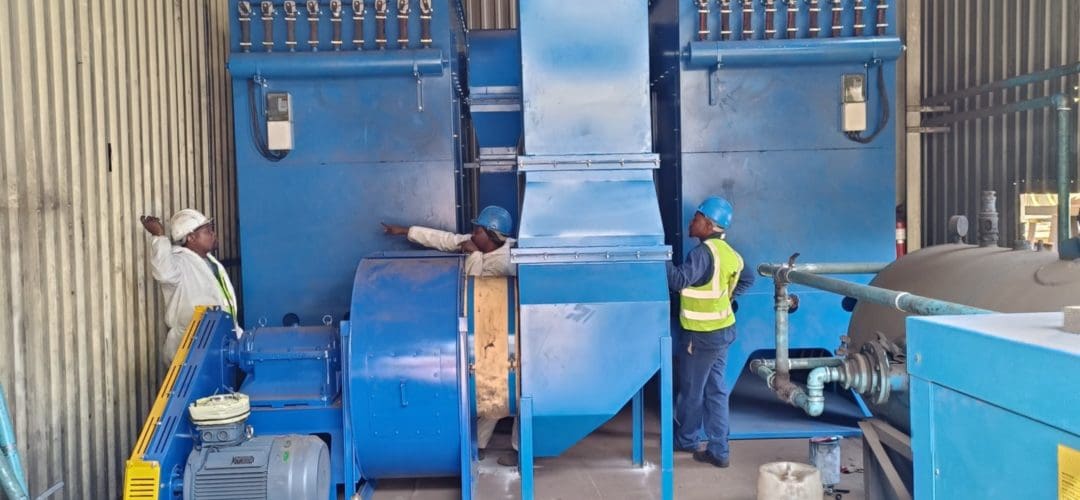
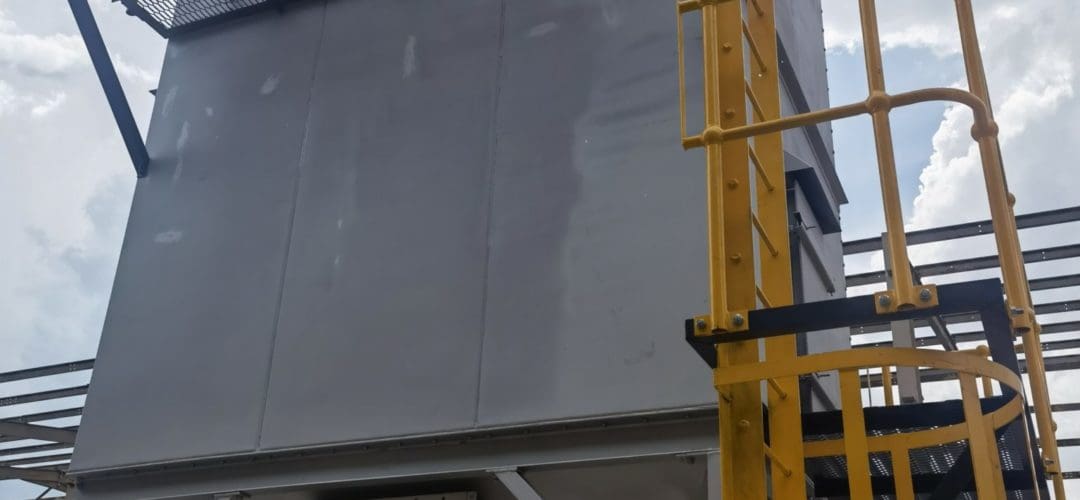
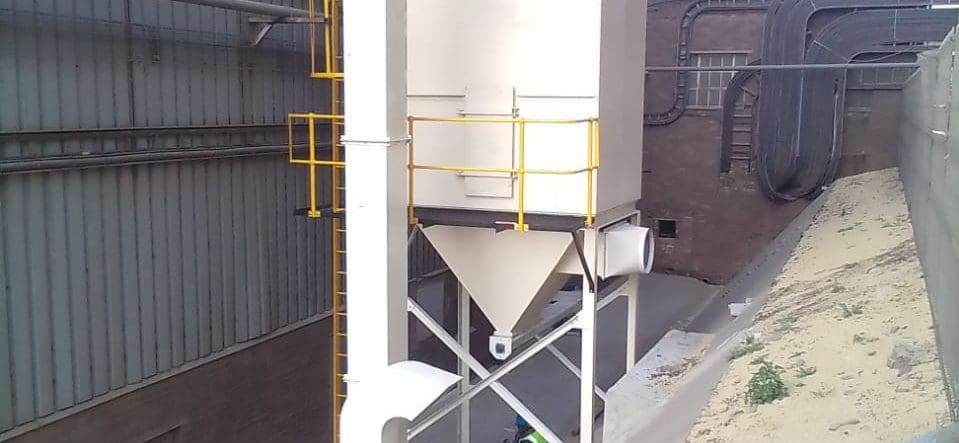
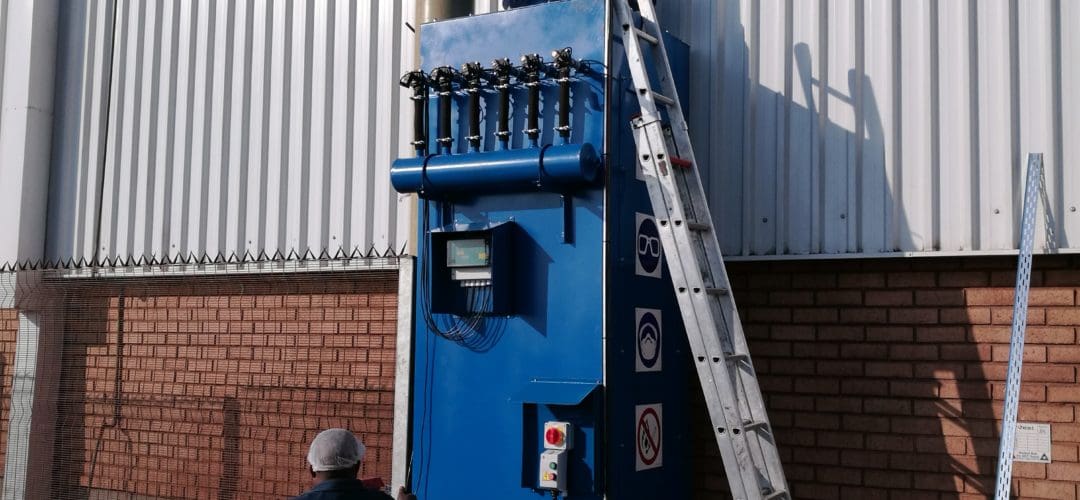
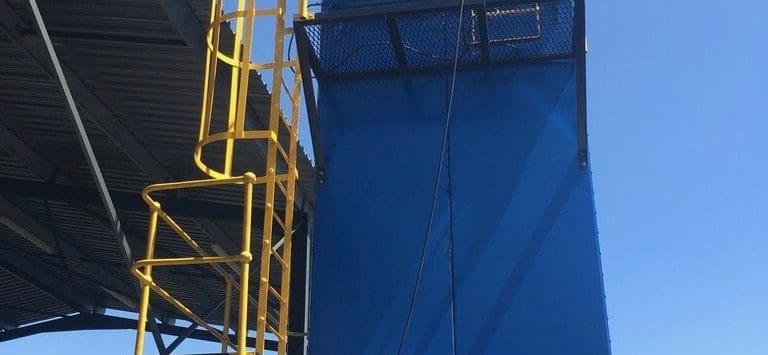 Dust extraction and material transportation for recycling plant
nickeys, February 12, 2017
Read more…