Frequently asked questions
What is a wheelabrator?
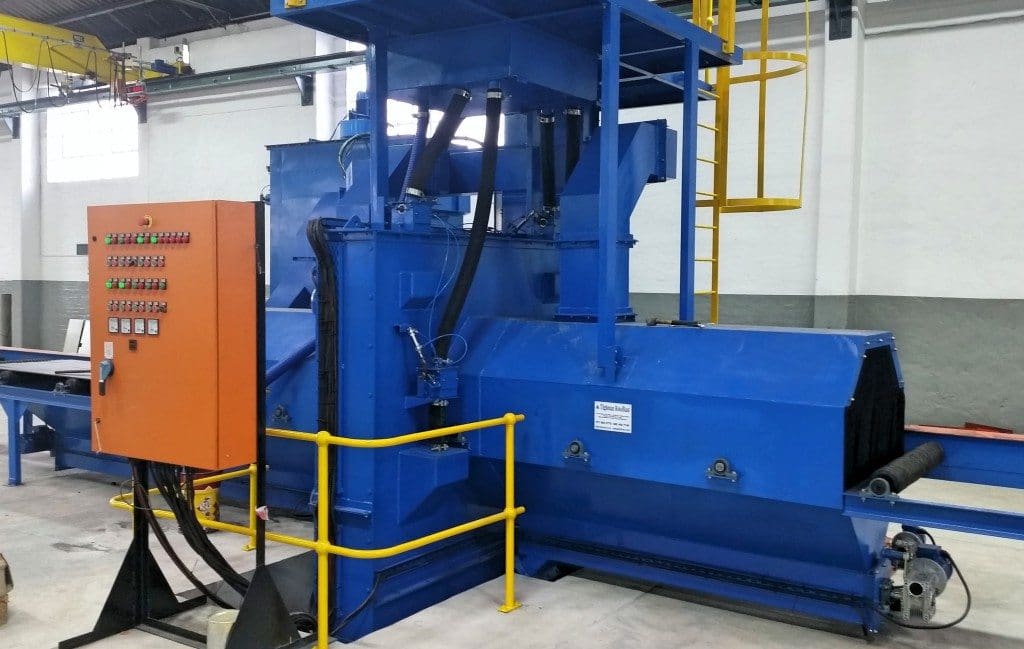
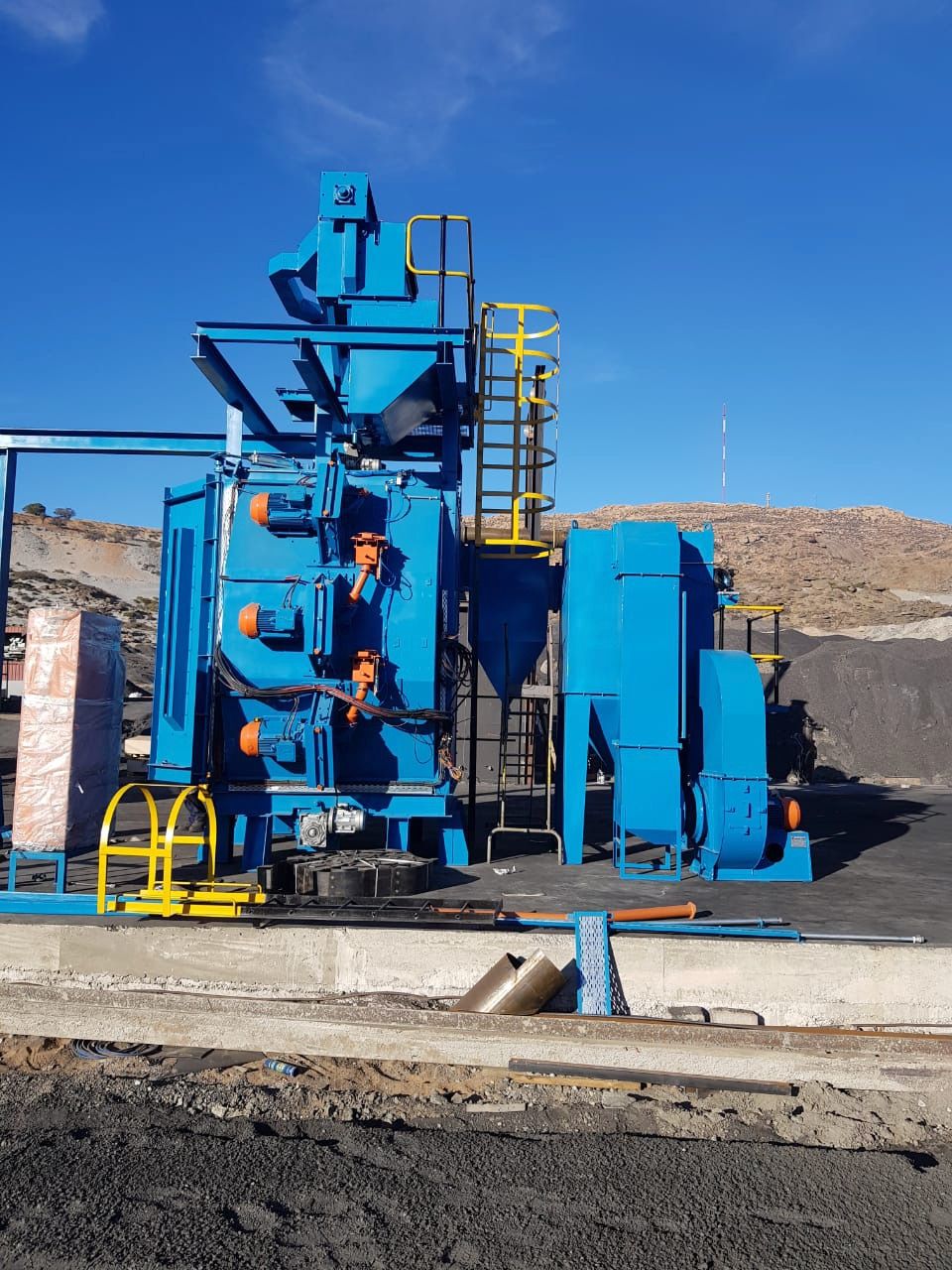
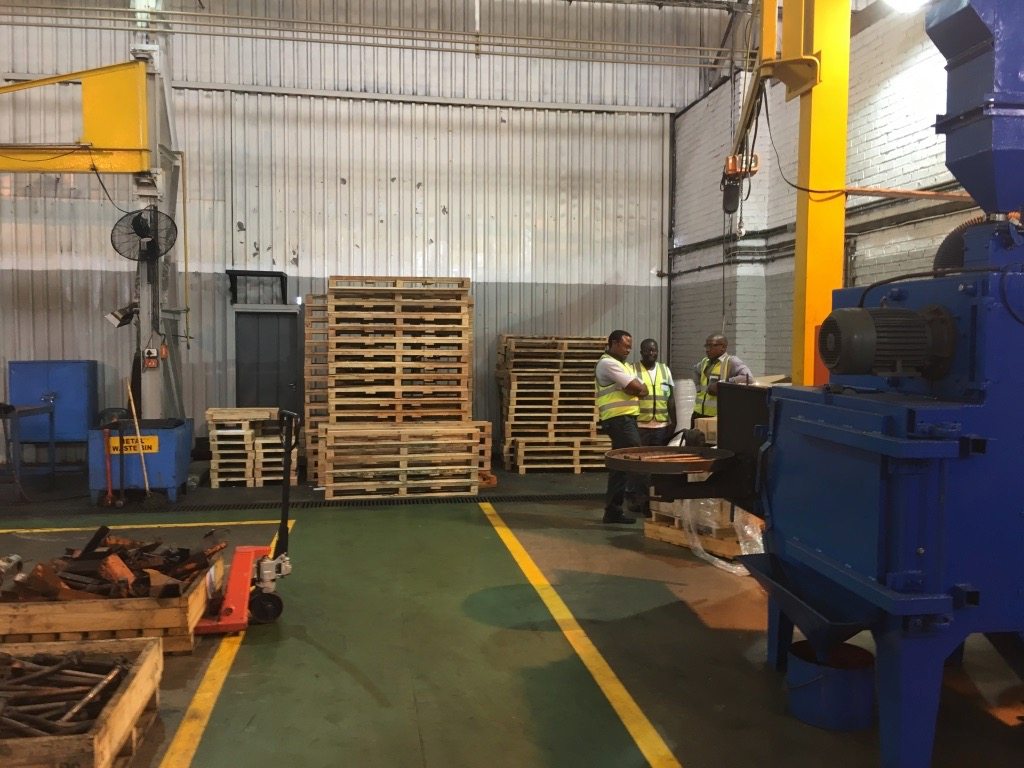
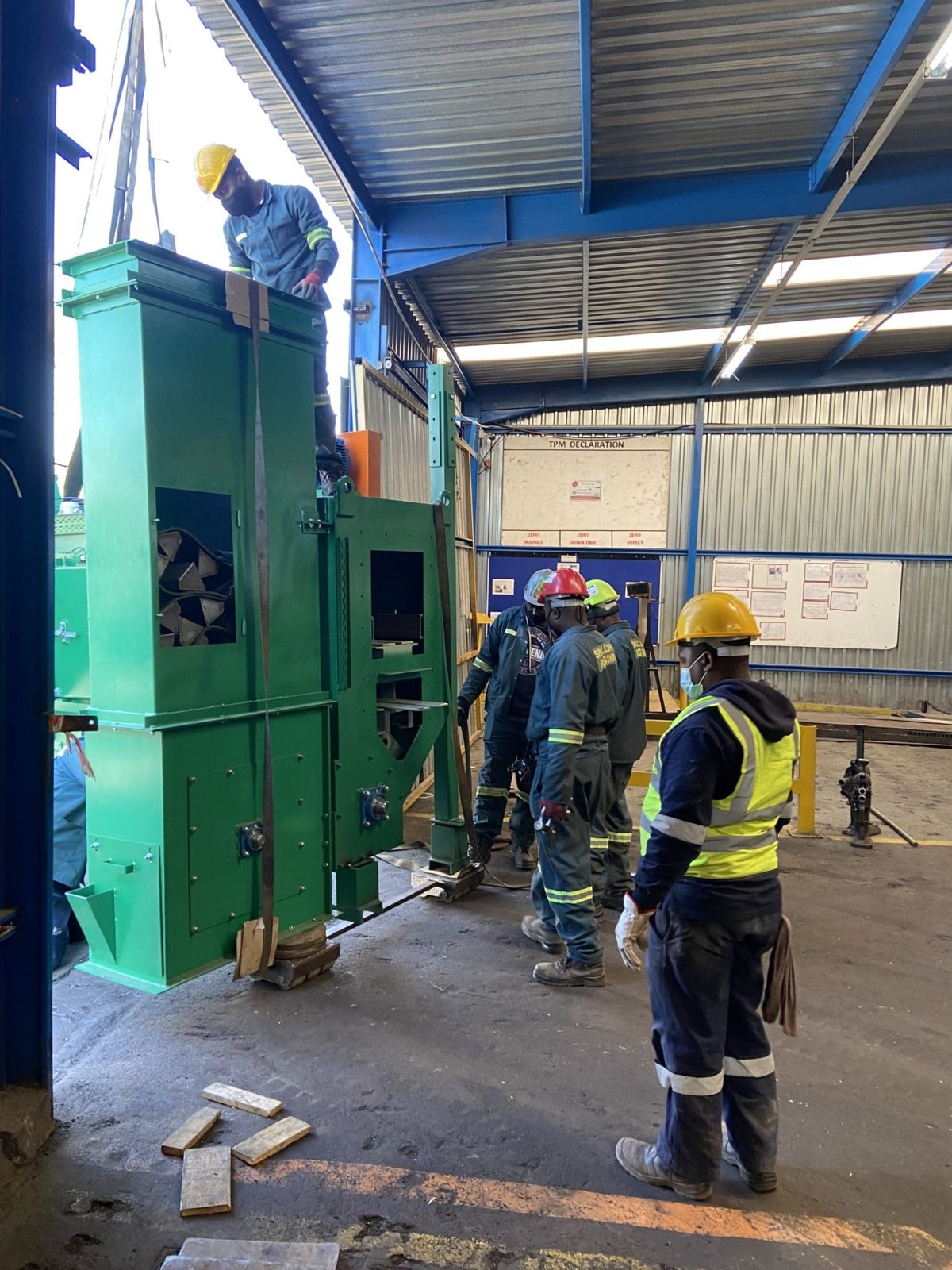
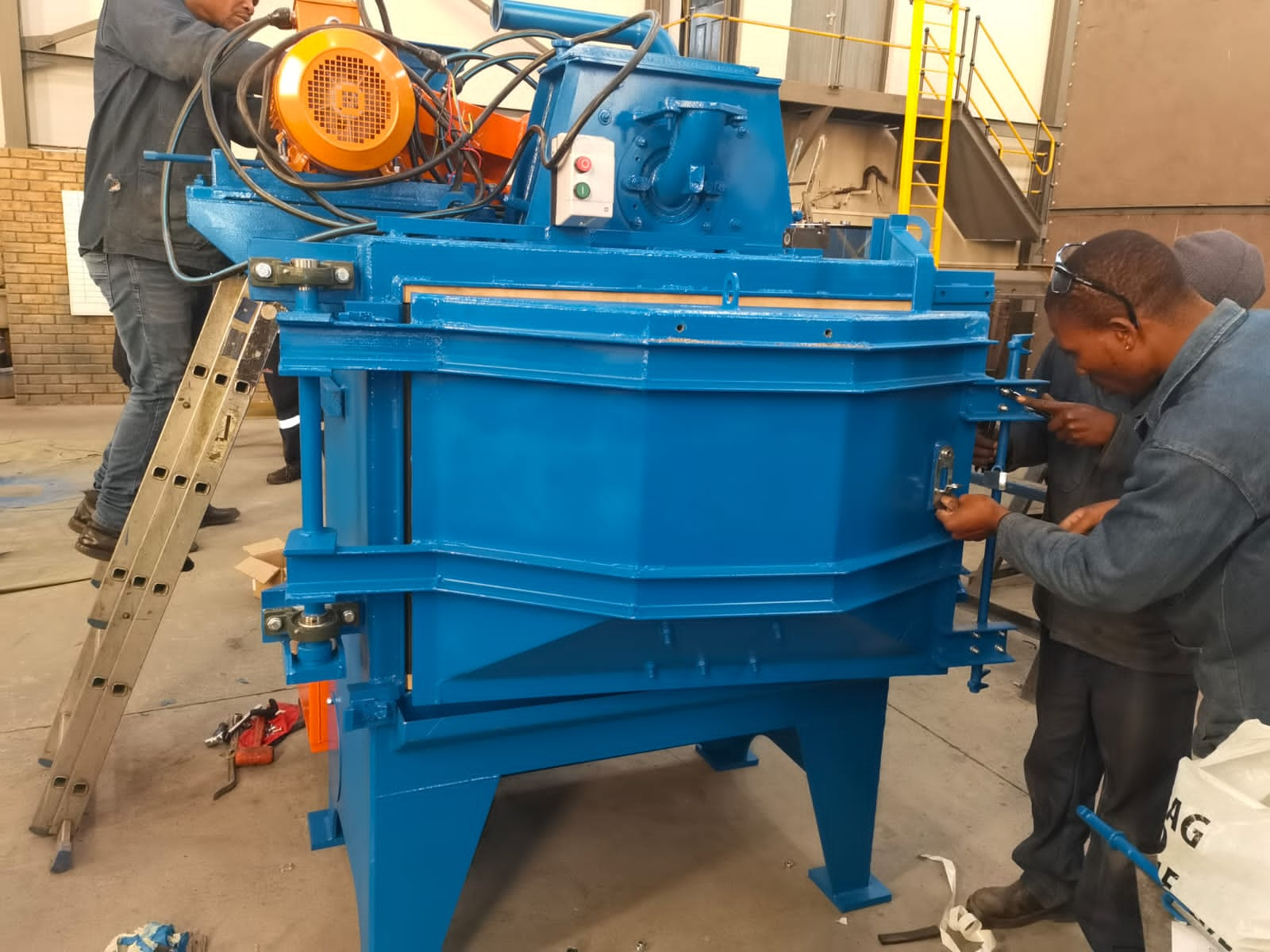
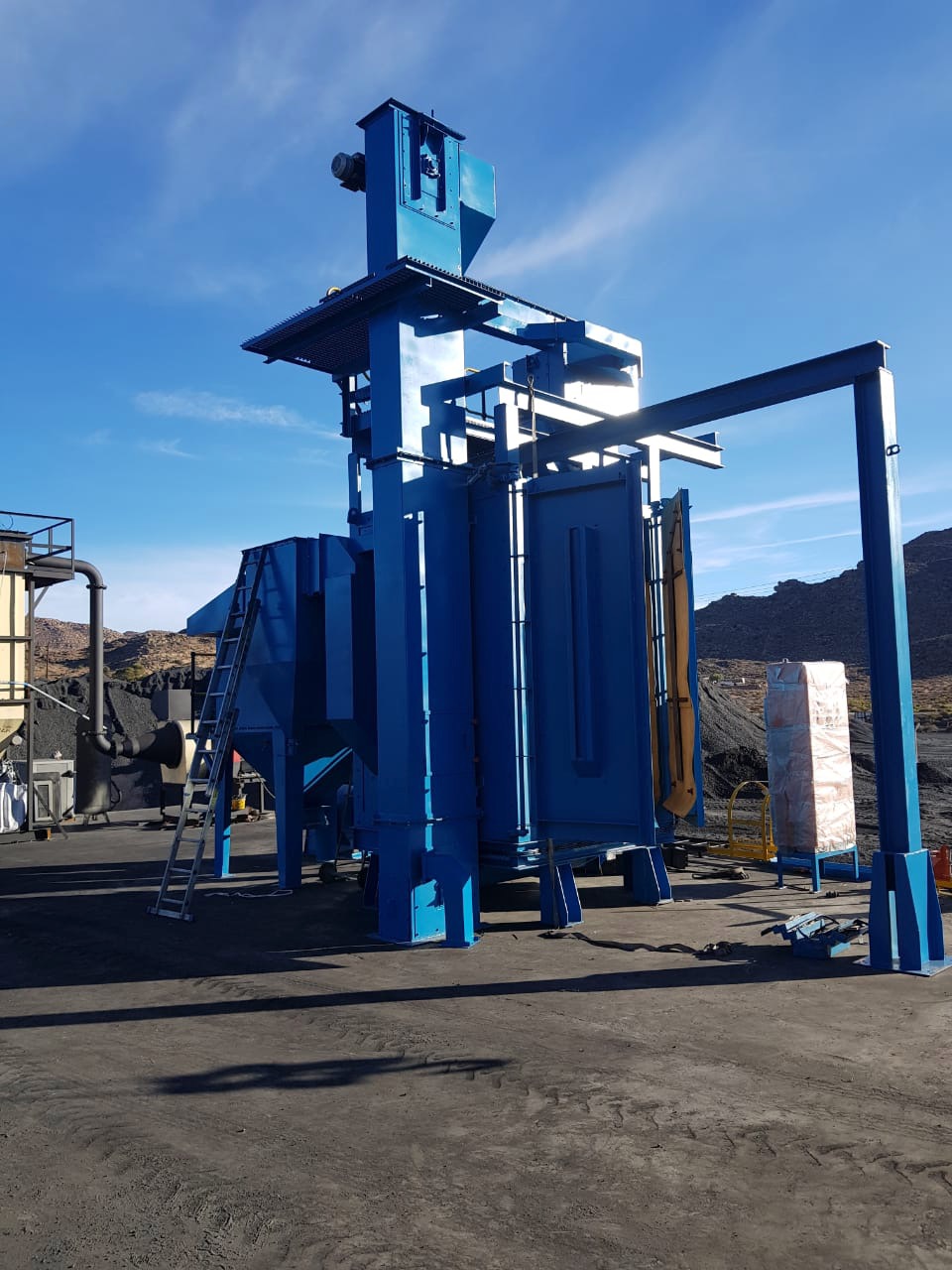
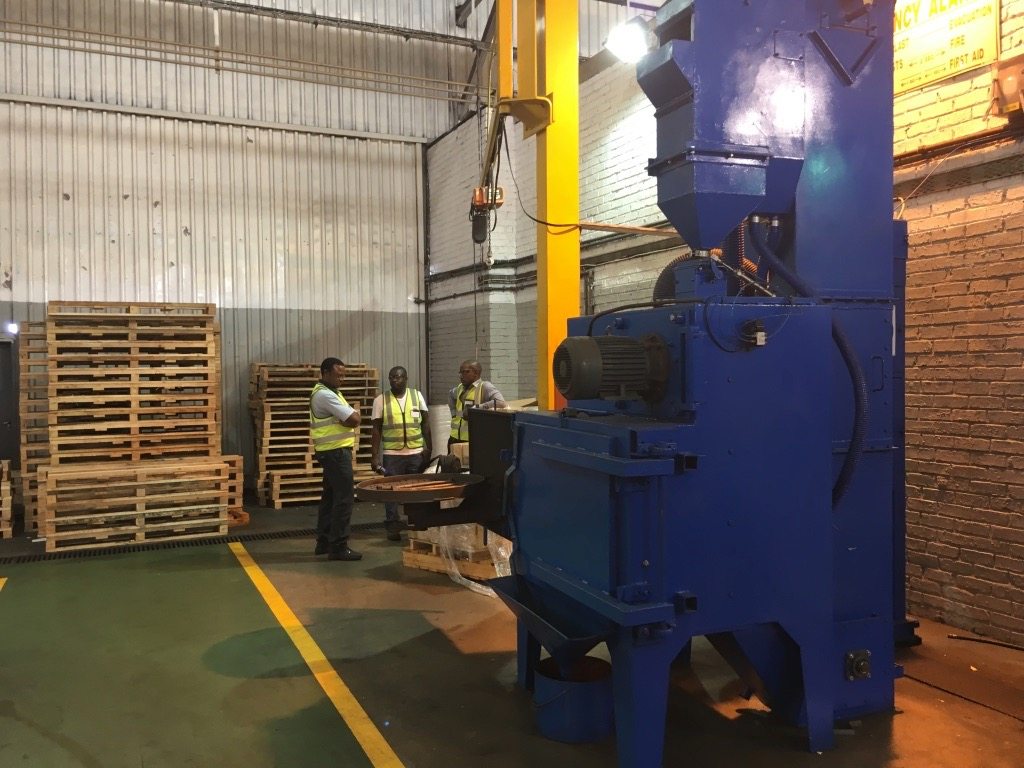
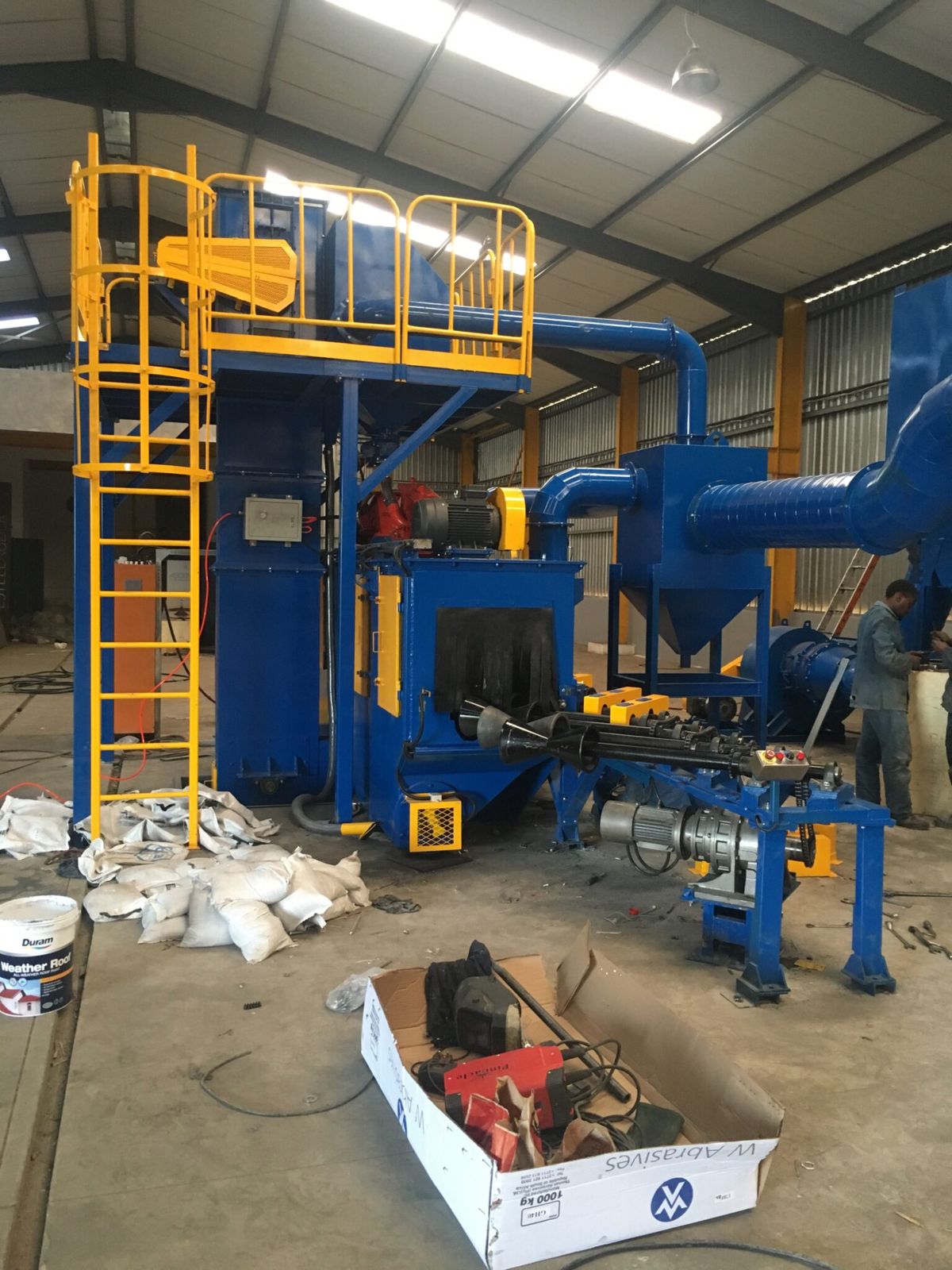
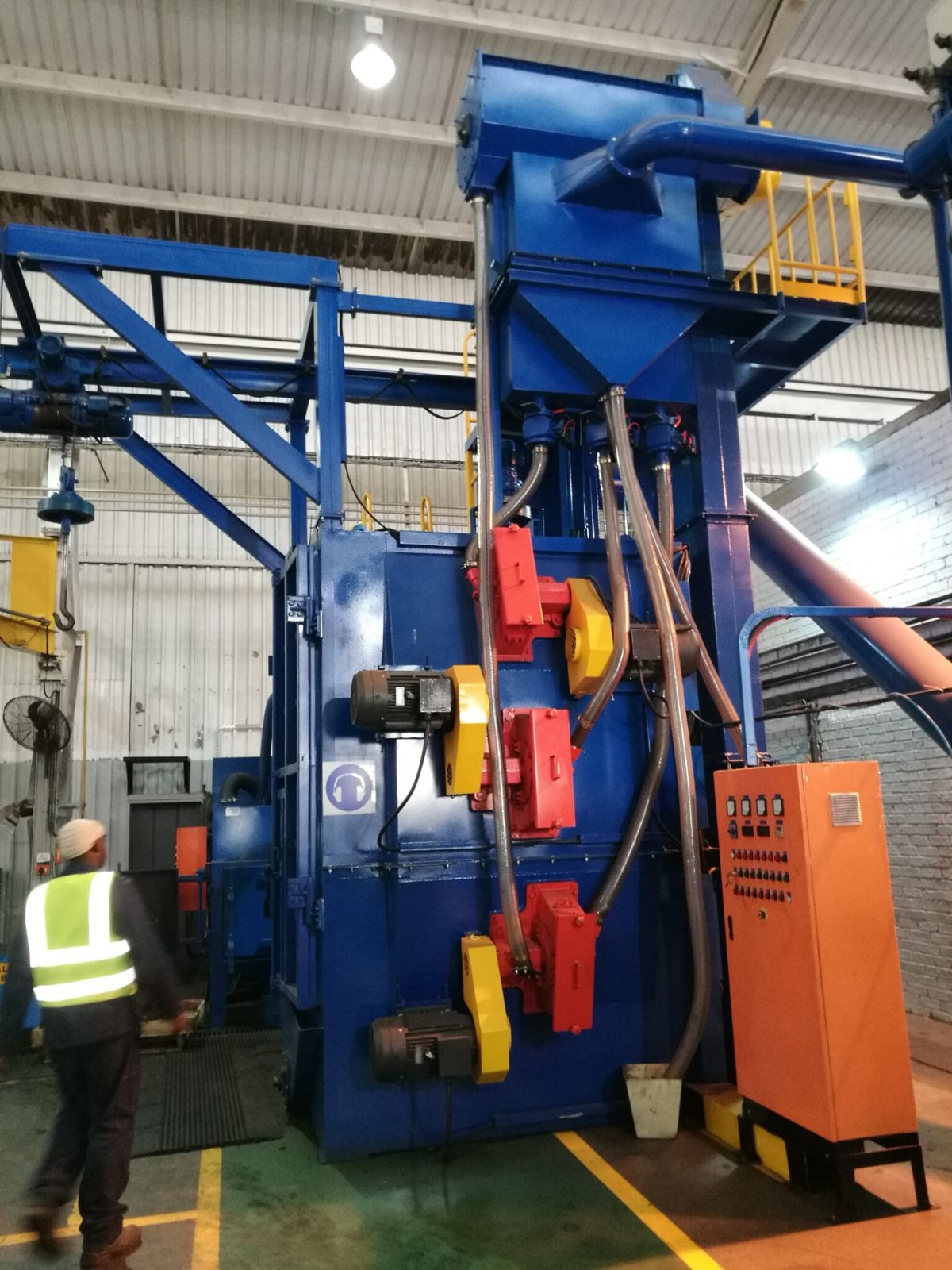
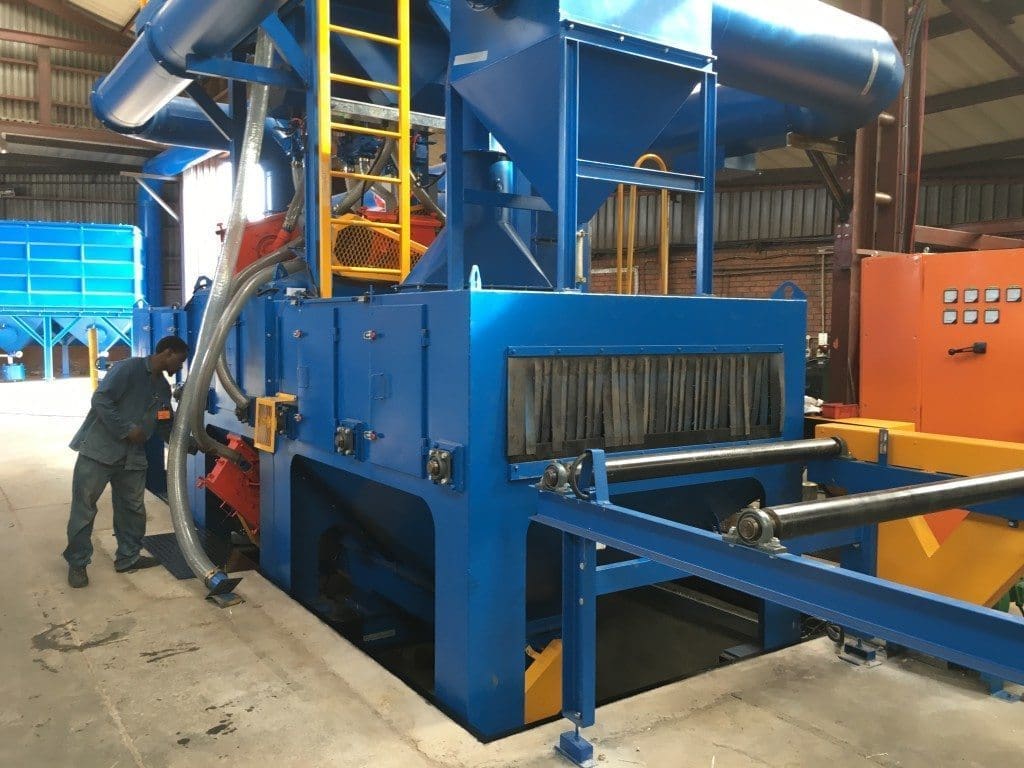
“Wheelabrator” began as a trade name and is now used generically for any wheel blast machine: an enclosed machine that uses spinning bladed wheels to throw steel abrasive at components for cleaning, descaling and surface preparation. Tilghman Rotoblast designs and manufactures wheelabrator machines in South Africa.
How does a wheel blast machine work?
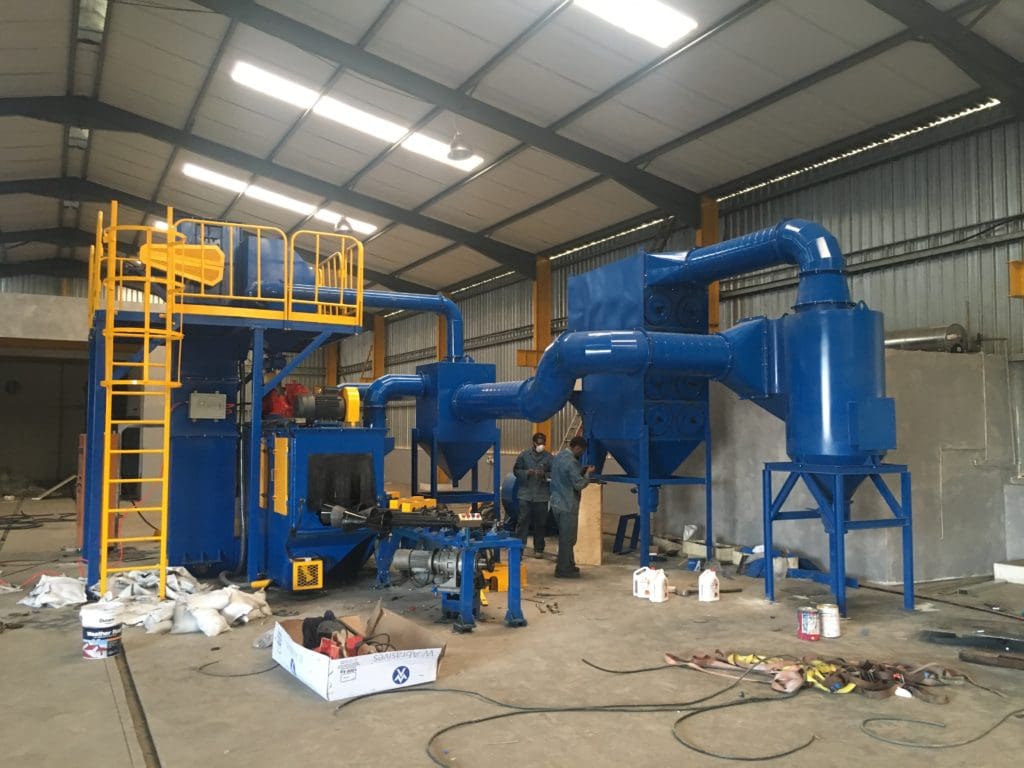
Motor-driven wheels accelerate steel shot to roughly 60–80 m/s and direct it in a controlled pattern at the workpiece. Spent abrasive falls into a recovery system where it is cleaned, separated and recirculated to the wheels, while a dust extraction unit removes fines and contaminants.
What is the difference between wheel blasting and air blasting?
Wheel machines deliver large volumes of abrasive continuously and economically, suiting repeatable high-throughput work. Air (nozzle) blasting suits very large one-off structures, selective blasting or delicate work. Many plants run both; Tilghman manufactures wheel machines and blasting booths, and supplies blast pots.
What types of wheelabrator machines are available?
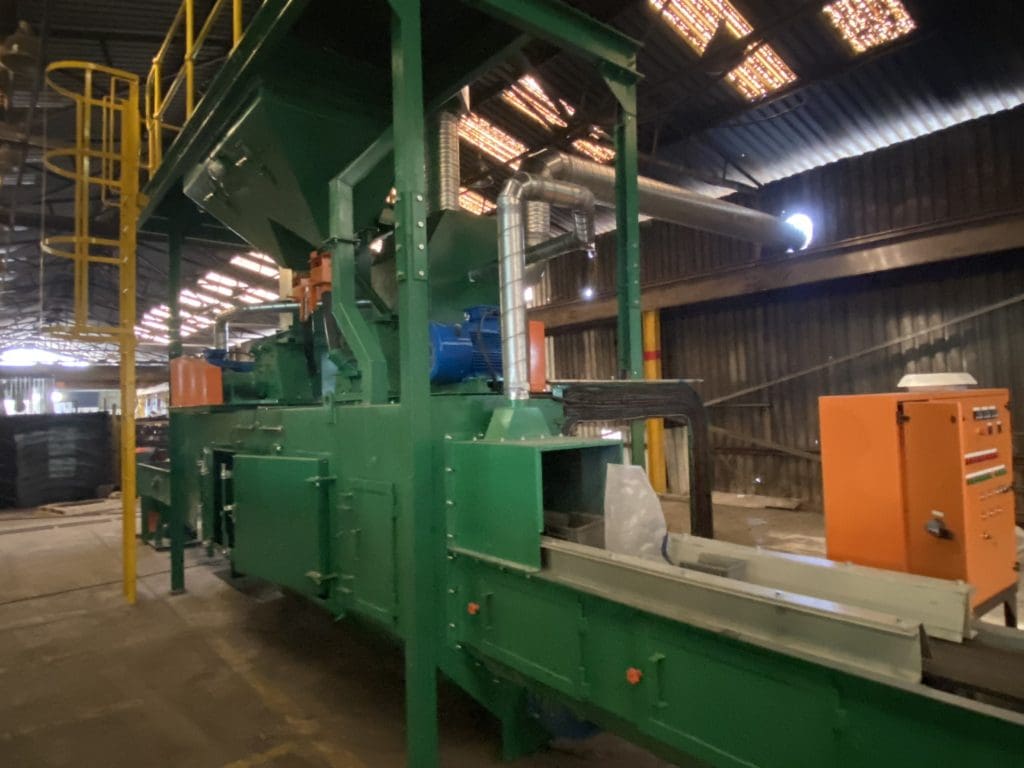
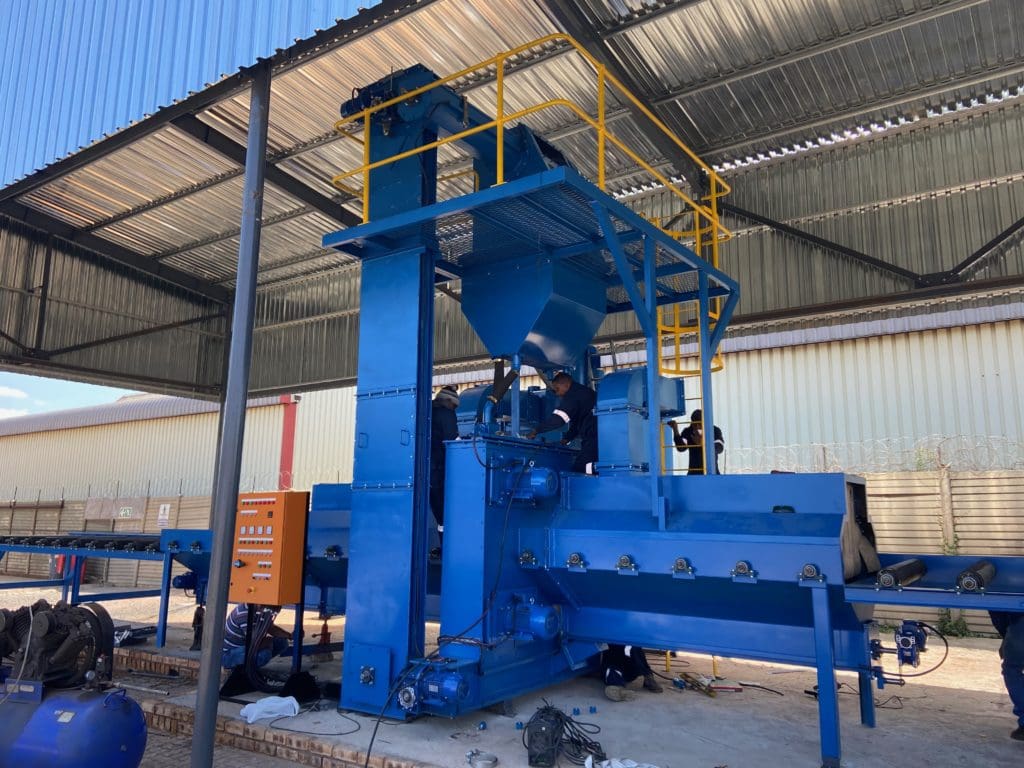
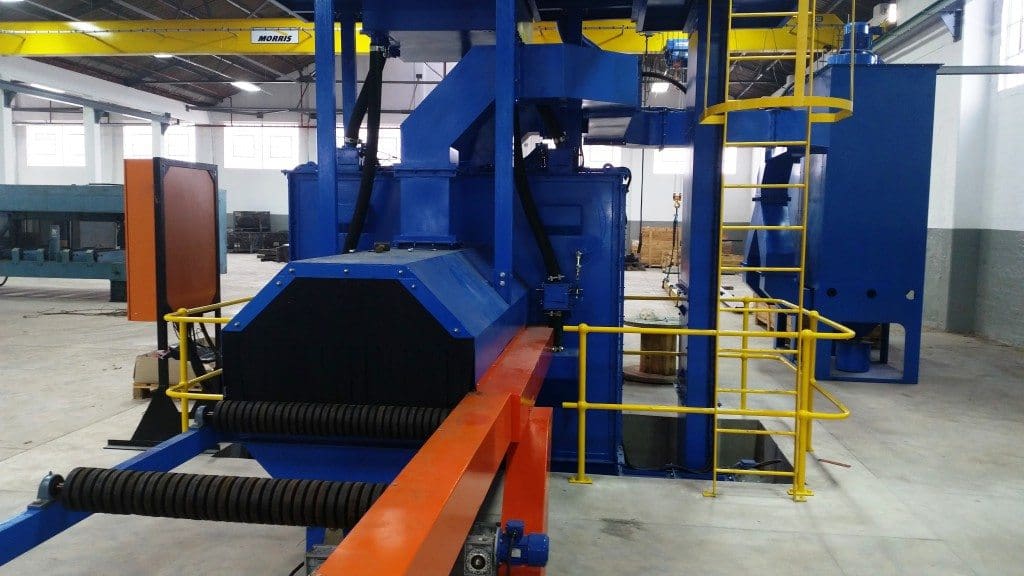
Tumblast machines for batches of small components, hanger machines for larger irregular parts, plate and pipe machines for plate, beams and tube, table machines, and continuous roller-conveyor systems. The right configuration follows the component shape and required throughput.
How do I choose the right size of machine?
Sizing is driven by the largest component envelope, the shape and weight of parts, and the required production rate. These determine the number and power of blast wheels, the handling method and the abrasive recovery capacity. Each Tilghman machine is engineered to the duty.
What abrasive do wheelabrator machines use?
Almost always steel shot, selected by size and hardness for the finish required. The abrasive recirculates thousands of times before wearing out, so consumption is low relative to the tonnage processed.
Can an existing wheelabrator be rebuilt or upgraded?
Yes. Tilghman rebuilds and retrofits wheel blast machines of most makes — replacing blast wheels, high-chrome wear plates, elevators and separators, and upgrading dust extraction and controls — typically at far lower cost than machine replacement.
Does a wheel blast machine need dust extraction?
Yes. Effective extraction keeps the abrasive mix clean, maintains blast efficiency and controls dust emissions for safety and compliance. Tilghman machines are supplied with appropriately sized cartridge or baghouse dust collectors.